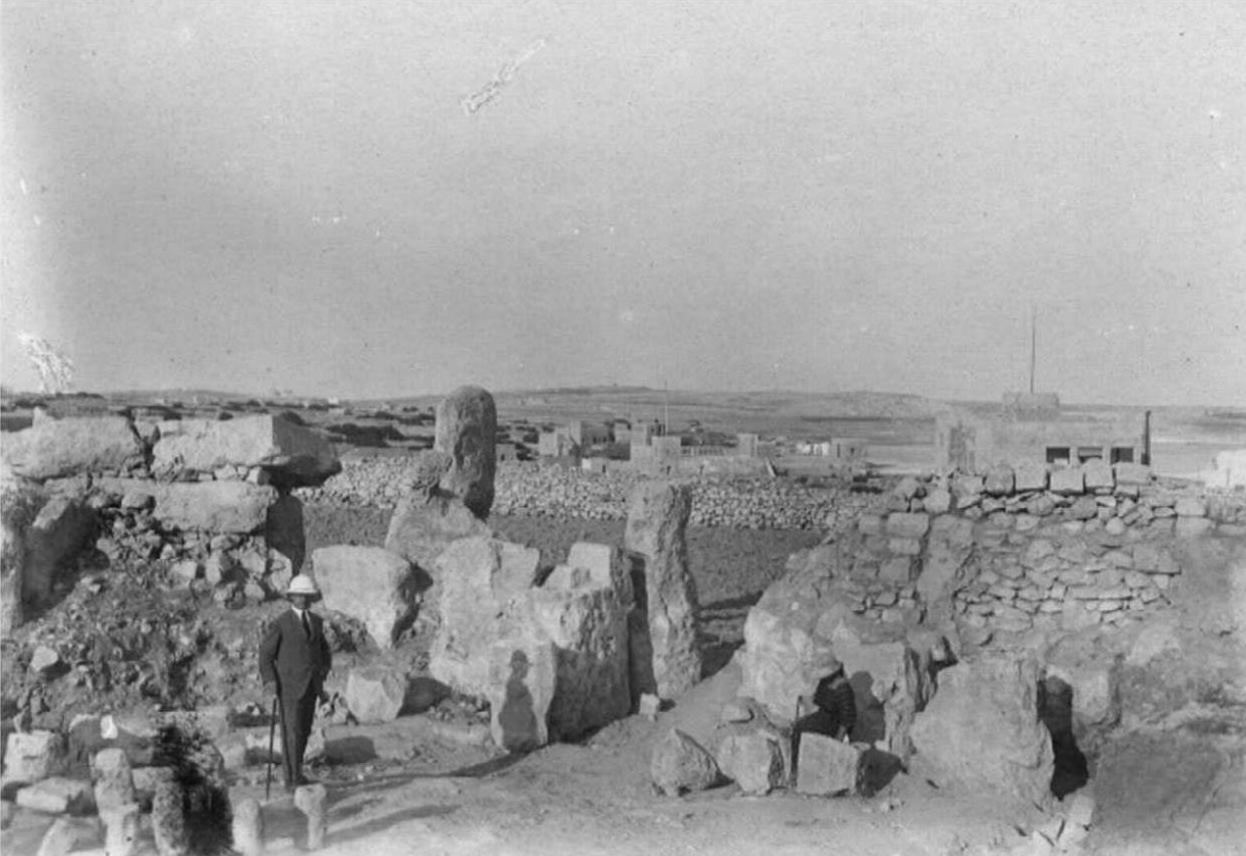

Here, at the peak of the valley, sit the ruins of one of the oldest human settlements in Malta and in the world. Borġ in-Nadur was in use between roughly from 3,600 to 700 BC, making it among the most ancient human structures in existence. People lived, worshipped and built here for nearly three thousand years.
What began as a Neolithic temple around 2500 BC was later transformed into a Bronze Age settlement. The site contains Malta's earliest known fortification, a 4.5-metre D-shaped bastion built to protect the village from inland attacks. Pottery fragments with Mycenaean designs were found here, showing that the people of Borġ in-Nadur were connected to broader Mediterranean civilisations long before recorded history.
The site was excavated in the 1920s by Margaret Murray, a pioneering female archaeologist at a time when the field was almost exclusively male. The finds are now in the National Museum of Archaeology in Valletta, but the stones remain here, quietly older than almost everything else you'll see today.
In 1994, the site was vandalised by pro-hunting groups, who sprayed slogans across the ancient stones in retaliation against animal rights campaigners. They chose to desecrate a 5,000-year-old monument to Maltese culture - the oldest surviving evidence of human life, daubed with paint to score a point in a argument about shooting birds. The site has been protected ever since.